Playing as a couple when one of you rarely plays starts with finding something you can both enjoy. Using two sticks, recognising an objective or judging a jump are learned skills. Even a co-op game can become frustrating if the experienced player makes every decision while their partner tries to keep up. The right starting point depends as much on your shared interests as on what the controller asks you to do.
This selection favours clear situations, problem-solving, complementary roles and ways to help each other through difficult sections. All ten games support local play for two; Blanc and Stardew Valley also offer online play. They are not equally easy to pick up: we explain the possible stumbling blocks, without treating a gentle atmosphere as a guarantee of easy gameplay. The platforms listed refer to the versions described, rather than every device that can run them through backwards compatibility.
1. Snipperclips: Cut It Out, Together! — let ideas matter more than reflexes

Co-op: local.
Platform: Nintendo Switch.
Two paper characters cut shapes out of each other to solve puzzles. A notch might hold an object; a point might reach a target. That logic makes a good suggestion valuable even when the person making it is still getting used to a controller. You can look at the same problem and discuss a solution before trying to put it into practice.
Start with the two-player puzzles rather than the competitive activities. You still need to handle objects: some situations involve moving or steadying them, and the right idea does not guarantee a successful attempt. Let both of you suggest shapes and try them out; if one person does all the cutting, the appeal of working together soon fades.
2. Untitled Goose Game — learn by planning mischief
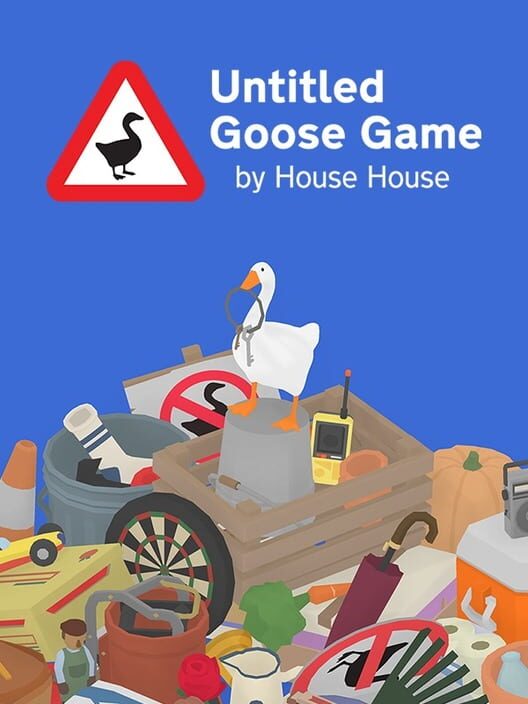
Co-op: local, with no built-in online co-op.
Platforms: PC, Mac, PlayStation 4, Xbox One and Nintendo Switch.
You play two geese disrupting village life. Distracting someone while your partner steals an object gives you a clear shared goal without a long list of powers to learn. The results of your actions are often immediately visible: a villager turns around, chases a goose or retrieves a possession. You can learn by experimenting rather than memorising commands.
The regular campaign is a better starting point than the timed challenges. Some tasks are small observation puzzles that may leave you wondering what to do; treat that search as a conversation rather than a speed test. Both geese share the same view, so staying close helps prevent the more confident player from setting the pace throughout the outing.
3. Pode — solve puzzles with two useful roles

Co-op: local.
Platforms: PC, PlayStation 4 and Nintendo Switch.
A rock and a star have different abilities that open a path through a mountain. Pode shifts the focus towards observing your surroundings and combining your actions. That division is useful for couples with different gaming habits: knowing more games cannot replace the need for your partner’s character.
Choose it if you enjoy thinking things through together and do not mind spending a while in the same room. A calm atmosphere does not make every solution obvious; if you prefer an adventure with few controls to remember, Blanc is another option to consider. On PC, have at least one controller ready for co-op, as the game’s listing specifies.
4. Blanc — start with few controls to remember

Co-op: local or online.
Platforms: PC and Nintendo Switch.
A wolf cub and a fawn must combine their abilities to cross snowy landscapes. The game uses just two buttons alongside movement and tells its story without narrative text. It is an entry point worth considering if lengthy tutorials or the feeling of having to memorise an entire controller put your partner off.
Simple controls do not remove the need to find your way or wait for each other at an obstacle. Treat these sections as a journey together, without rushing ahead as soon as you understand what to do. The choice of local or online play is useful for couples in different places; check that your versions are compatible before buying, rather than assuming PC and Switch cross-play.
5. Yoshi’s Crafted World — learn to jump without being limited to a supporting role

Co-op: local.
Platform: Nintendo Switch.
Each of you controls a Yoshi with the same ability to jump, swallow enemies and throw eggs. Your partner can participate fully in the journey rather than settling for a character with fewer abilities. Mellow Mode gives the Yoshis wings to make obstacles easier to cross; that is practical help when judging a jump still takes most of your concentration.
Aim to finish the levels first, rather than find every hidden object. The cardboard scenery invites you to explore, but a thorough search takes more observation and precision than simply progressing. Wings do not remove the need to learn egg throwing or movement either: travel side by side and let each person work through a section instead of leading the whole way.
6. Luigi’s Mansion 3 — explore together with complementary roles

Co-op: local in the story, after unlocking Gooigi.
Platform: Nintendo Switch.
The second player can control Gooigi, Luigi’s double, whose properties let him get past certain obstacles in a different way. He helps with exploration, puzzles and catching ghosts. This co-op earns its place if you enjoy searching rooms and pointing out clues: some solutions rely on Gooigi’s abilities, giving your partner a meaningful role. The experience gap then matters less than how you combine your observations and actions.
You cannot play the campaign together from the start: Gooigi must first be unlocked early in the adventure. Prepare that section before your evening if you want to begin together. Aiming the vacuum and handling fights still take practice, and you both need to like the haunted-house setting; a comic tone does not guarantee your partner will enjoy the ghosts.
7. Unravel Two — get through a difficult section with your partner’s help

Co-op: local.
Platforms: PC, PlayStation 4, Xbox One and Nintendo Switch.
The two characters are connected by a thread they can use to support each other and swing. Crucially, one can carry the other, so a tricky jump does not have to stop both of you in your tracks. That makes the game relevant when one person is still learning to judge their movements and you want to keep sharing the same adventure.
Carrying is occasional help, not a reason for the less experienced player to watch the whole game. Give them time to try before offering to take over that section. Jumps and some faster sequences require precision; prioritise the main campaign and save the extra challenges for when you both want more practice.
8. Cat Quest II — try combat without starting with a complex system

Co-op: local, with no built-in online co-op.
Platforms: PC, Mac, PlayStation 4, Xbox One and Nintendo Switch.
A cat and a dog explore the same world and fight together. The overhead view removes the need to control a camera behind your character, a common hurdle when you rarely play. You can learn movement, attacks and dodges while pursuing shared goals, then discuss equipment without diving straight into a role-playing game with lots of specialisations.
This is a choice for someone curious about action, rather than someone who wants to avoid it entirely. Battles happen in real time and require you to react. Stick to quests suited to your progress instead of rushing towards a stronger enemy; the experienced player can help choose the next step without dictating how quickly you move through it.
9. Disney Illusion Island — help each other without taking the controller

Co-op: local.
Platforms: PC, PlayStation 5, Xbox Series X|S and Nintendo Switch.
Mickey, Minnie, Donald and Goofy explore an island in a 2D adventure. For a pair with different levels of experience, the main appeal lies in the ways players can help each other: lowering a rope, giving a boost for a jump or offering a heart through a hug. You can help using your own character while leaving your partner in control of theirs. The infinite-health option also reduces the pressure of taking damage while learning.
That option does not make the jumps for you: climbing, gliding and using unlocked abilities still require timing. Expect to explore a connected world rather than a series of small, independent levels. Start with the main adventure before trying timed challenges. On PC, PlayStation 5 and Xbox Series X|S, the game has the extended title Disney Illusion Island Starring Mickey & Friends; the co-op described here remains local.
10. Stardew Valley — build a shared project with room for both of you

Co-op: local split-screen or online; no cross-play between PC and consoles.
Platforms: PC, Mac, Linux, PlayStation 4, Xbox One, Nintendo Switch and Nintendo Switch 2.
A shared farm lets you divide activities according to what you enjoy: growing crops, exploring, fishing or decorating. Your partner can develop an activity they like while you pursue another, rather than staying behind you in every level. It is an option for couples who would rather return to an ongoing project than constantly learn new controls.
Be wary of assuming “relaxing game” means no pressure: days move on, energy needs managing, and time does not simply stop when an online player opens a menu. Start with a small shared goal and let go of the need to make every day productive. Prepare a cabin for the second player; on Switch, each person needs a full controller or a pair of Joy-Con, rather than one Joy-Con alone. The mobile versions are not the ones recommended here for your co-op evening.
Which game should you start with?
- Your partner prefers ideas to reflexes: start with Snipperclips on Switch, or Pode, which is also on PC and PlayStation 4. The pleasure comes from the solution you find together.
- You want to laugh and experiment: Untitled Goose Game turns learning into shared mischief; Blanc offers a journey with few controls instead.
- Your partner would like to try jumping or action: Yoshi’s Crafted World combines two equal roles with Mellow Mode; Cat Quest II introduces combat without a 3D camera to manage.
- Your skill gap mainly gets in the way of progressing: Disney Illusion Island offers ways to help each other and an infinite-health option; Unravel Two lets you carry your partner occasionally. These aids do not replace the desire to learn movement.
- You prefer exploring or building together: Luigi’s Mansion 3 lets you search rooms and combine two roles after its solo introduction; Stardew Valley lets you return to your farm from one session to the next.
- You play from different places: consider Blanc or Stardew Valley and check your platforms. Remote screen-sharing is not the same as a built-in online co-op mode.
For your first evening, set a modest goal: one puzzle, one mission or a few farm days, rather than an entire campaign. Let your partner try before explaining, ask whether help is welcome and avoid instinctively taking their controller. If they dislike a mechanic, changing games is a better outcome than reluctantly finishing the session. Playing rarely tells you nothing about someone’s tastes or willingness to take on a challenge.
Keep your next ideas in Gameedy
Once you have chosen your first game, use Gameedy to organise the titles that interest you and explore recommendations based on your library and criteria. Then compare co-op modes and platforms: your next evening depends as much on what you enjoy sharing as on the game itself.